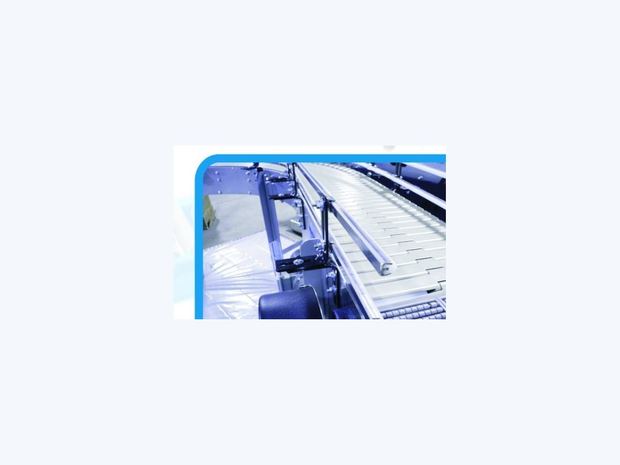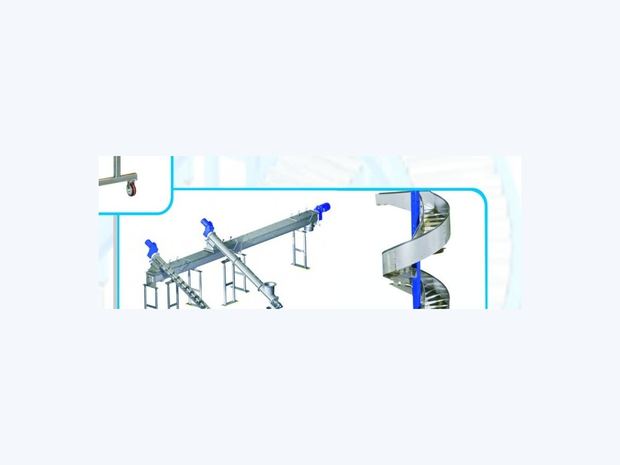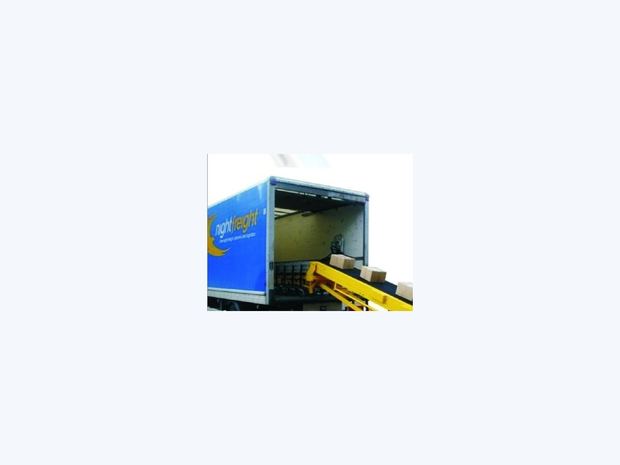
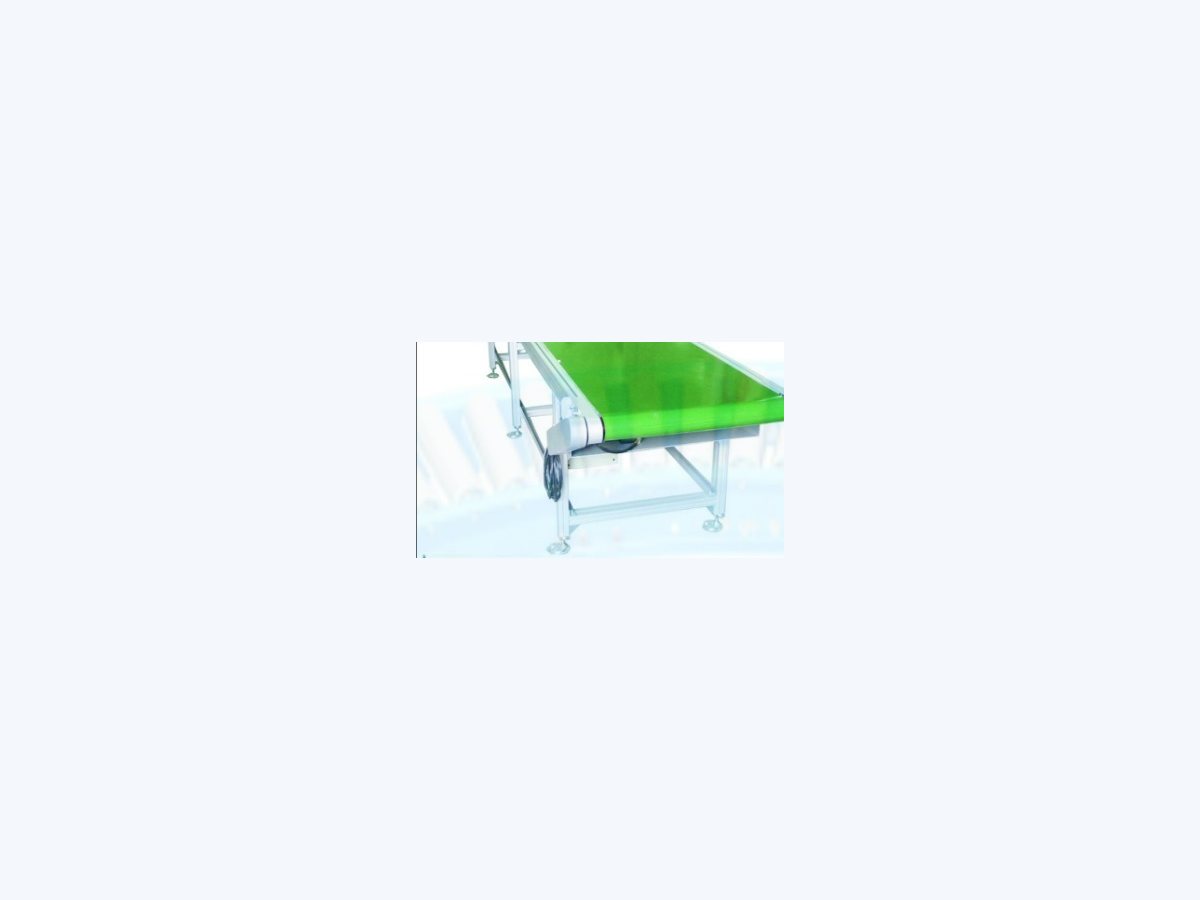
Belt conveyors are the most widely used type across industries. The product rides on a PVC, polyurethane or rubber belt chosen for the application, which reduces friction between the product and the conveying surface. But what sets a conveyor's capacity is not the belt — it is what sits underneath it.
Skid (slider bed)
The belt slides over a flat steel plate. It is the simplest and cheapest configuration, used for light and medium loads up to 40 kg/m over runs of up to 25 m. Its advantage is a perfectly flat surface, so small or unstable products do not wobble; side tables, load cells and receiving chutes bolt straight on. Its limitation: every kilogram converts into friction between belt and plate, so the motor works harder and the belt wears faster as loads climb.
Roller-supported
Instead of a plate, the belt slides over a bed of rollers 50, 60 or 72 mm in diameter, selected by load type and size. Friction drops sharply, so the same drive can move up to 150 kg/m. This is the logical choice for full crates and sacks. The trade-off: roller pitch has to be calculated properly, otherwise the belt develops a slight scallop between rollers that shows up under light products.
Troughed
Here the belt itself is formed into a U, sliding over two-roller sets up to 65 cm wide or three-roller sets up to 120 cm. That shape lets the conveyor carry bulk material — sand, cement, grain, salt — at rates reaching 1000 tonnes per hour. No other configuration comes close.
Choosing in one minute
Ask three questions in order. Is the product discrete units or bulk material? If bulk, the answer is troughed and the conversation ends. If units, how many kilograms per metre? Under 40 → skid. Above → roller-supported. Third: does the product contact the belt directly and stay there through wet processing? If so, revisit the belt material itself and consider a modular mat instead of a continuous belt.