Roller conveyors are among the most preferred types in the paper, carton, food and beverage sectors: simple to run, simple to maintain, and low in cost. But before ordering one, a single decision shapes everything afterwards — free or driven?
A free roller bed moves by hand or on its own through a modest incline built into the frame. No motor, no power draw, no electrical maintenance at all. That makes it the right answer when:
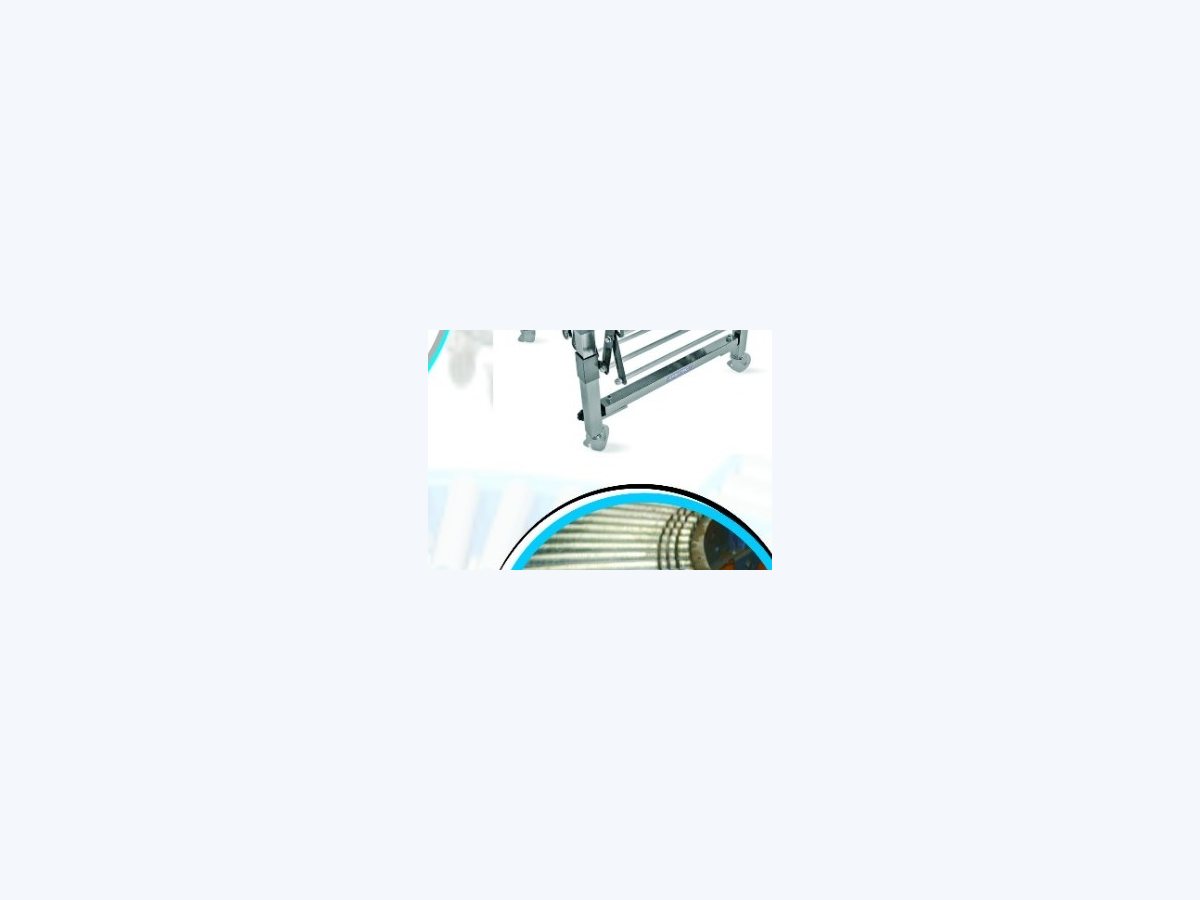
• Loads are light to medium — cartons, boxes, grouped containers. • Runs are short, especially between two adjacent workstations. • The area is final packing or goods-in, where an operator naturally pushes product along anyway. • The route changes periodically — the expandable version folds, extends and steers around corners.
Free rollers have a ceiling, though. As soon as loads get heavier or the run gets longer, the symptoms show: operators push harder, tempo turns irregular, and boxes pile up at the end of the run.
That is where driven rollers come in. In the chain-driven version, motion transfers from the motor to a chain running on rollers fitted with side sprockets — this is what carries full pallets and loaded crates. In the belt-driven version, motion comes from a belt beneath the rollers, giving quieter, gentler rotation, which matters when the product surface itself is delicate.
One point often missed: a gravity bed is not really "free". The incline consumes height, and that height accumulates along the run. Over a long distance you end up needing an impractical starting elevation.
A practical rule: under 30 kg per unit, under 6 metres, and no machine dictating the tempo — start with free rollers. Otherwise design for a motor from the outset. Retrofitting a drive onto a frame built for gravity costs more than doing it properly the first time.